

The National Seminar on “Indian Knowledge Systems in the Light of NEP 2020: Pedagogy, Sustainability and Innovation” addresses the paradigm shift envisioned by NEP 2020 to embed Indian Knowledge Systems (IKS) across contemporary curricula. The seminar provides an interdisciplinary platform for researchers, educators, administrators, and policymakers to move beyond tokenistic inclusion. The sessions focus on three core dimensions: revitalizing learner-centred, experiential pedagogy through classical Indian epistemological frameworks (Anubhava, Vichara); mobilizing indigenous ecological wisdom and ethics (Vasudhaiva Kutumbakam) toward global sustainability goals; and driving curriculum innovation, grassroots entrepreneurship, and epistemic justice. The seminar also seeks to deliver actionable institutional frameworks, model syllabi, and policy recommendations to support higher education institutions in integrating IKS into modern academic and credit frameworks.
SCHOOL OF EDUCATION, ADAMAS UNIVERSITY
in collaboration with
GOPAL CHANDRA MEMORIAL COLLEGE OF EDUCATION
is organizing a
ICSSR Sponsored Two-Day National Seminar
on
Indian Knowledge Systems in the Light of NEP 2020: Pedagogy, Sustainability, and Innovation
Date: 22nd – 23rd December, 2026
Venue: Rabindranath Tagore Auditorium (AU1), Adamas University
Mode: Hybrid
About the Seminar
About the Adamas University
Established in 2014, Adamas University is a premier institution, with a sprawling green campus extending over 120 acres, nestled in Kolkata, West Bengal, and accredited with NAAC ‘A’ grade. Guided by a vision of global excellence, Adamas focuses on interdisciplinary education, research, and innovation. With robust international collaborations, advanced research infrastructure, and strong industry linkages, the university is committed to developing socially responsible, professionally competent graduates who actively contribute to nation-building.
About School of Education, Adamas University
With top-notch facilities and opportunities for learning, School of Education, offers both professional and general courses to a diverse, multicultural student community from all socio-economic backgrounds. The school fosters innovative and transformative learning, nurturing future teachers and leaders who can thrive and sustain themselves in a complex, globalized world. Deeply committed to addressing the social determinants of education, supporting diverse learners, and upholding the principles of equity and social justice, the School of Education strives to make a meaningful impact. Through a wide range of national and international collaborations and ground-breaking research initiatives, the school aims to create a dynamic learning environment that prepares the next generation of learners to excel with passion, resilience, and purpose in the evolving global community.
About the GCM College of Education
Gopal Chandra Memorial College of Education (GCMCE) is a premier government-aided teacher education institution located in New Barrackpore, Kolkata, affiliated with Baba Saheb Ambedkar Education University (BSAEU) and recognized by the National Council for Teacher Education (NCTE). Established in July 1967 by Late Haripada Biswas in homage to Late Principal Gopal Chandra Majumdar, the college is recognized under UGC Sections 2(f) and 12(B) and is accredited by NAAC. Guided by its motto, “Light to Enlighten,” the institution has been dedicated for over six decades to fostering excellence in teacher training across the Sciences, Humanities, and Commerce through robust academic programs, innovative pedagogy, extension activities, and research-driven initiatives.
Call for Paper
Authors, educators, researchers, scholars, and practitioners are cordially invited to contribute original, unpublished research papers, conceptual studies, and case studies to the National Seminar.
Submissions should explore significant advances, critical inquiries, and innovative frameworks centred on Indian Knowledge Systems (IKS) that align with the vision of the National Education Policy (NEP) 2020. Contributions examining indigenous pedagogical practices, sustainability, innovation, and multidisciplinary integrations (including the synthesis of Arts, Humanities, and Sciences) in contemporary education are highly encouraged.
Accepted papers will be scheduled for oral presentation during the technical sessions of the seminar.
Esteemed Dignitaries
Chief Patron
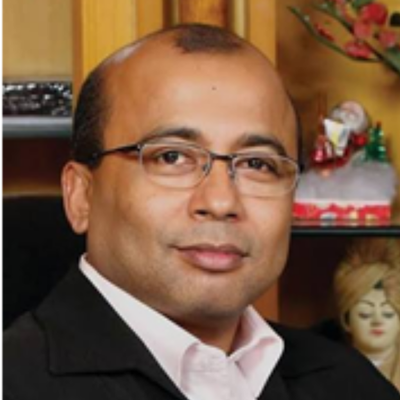
Prof. (Dr.) Samit Ray
Founder and Chancellor – Adamas University
Founder and Chairman – RICE Group
Co-Patron
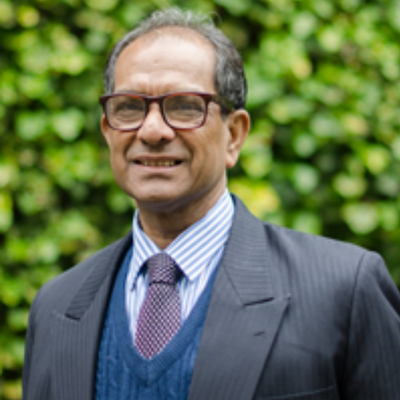
Prof. (Dr.) Suranjan Das
MA(Cal), D.Phil. (Oxon) Vice-Chancellor,
Adamas University
Chairpersons
Dr. Shreyashi Paltasingh
Principal Gopal Chandra
Memorial College of Education
Dr. Keya Ghosh
Dean – Administration Dean – SoE
(Administration) Professor
Department of Commerce
Adamas University
Convener
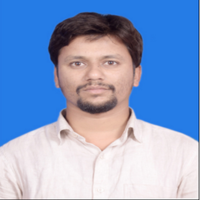
Dr. Vishal Kumar
Assistant Professor (Grade-II)
School of Education Adamas University
Co-Convenor
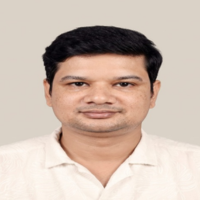
Dr. Samaresh Adak
Assistant Professor in Chemistry (Stage-II)
Gopal Chandra Memorial
College of Education
Organising Secretaries
Dr. Brotati Chakraborty
Assistant Professor & HoD
School of Education Adamas University
Dr Paramita Bandyopadhyay
Associate Professor
Gopal Chandra Memorial
College of Education
Co-ordinators
Dr. Md. Nawaz Sarif, Assistant Professor, School of Education, Adamas University
Dr. Madhurima Chakraborty, Assistant Professor, School of Education, Adamas University
Dr. Prasanta Gayen, Assistant Professor, School of Education, Adamas University
Dr. V. R. Rajesh, Assistant Professor, School of Education, Adamas University
Dr. Sisir Kumar Sarkar, Assistant Professor, Gopal Chandra Memorial College of Education
Esteemed Guests and Speakers
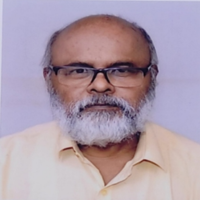
Prof. Arunasis Goswami
Vice-Chancellor
Baba Saheb Ambedkar Education University (BSAEU)
Kolkata, West Bengal
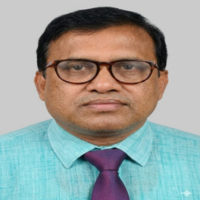
Prof. (Dr.) Debabrata Mitra
Vice-Chancellor
West Bengal State University (WBSU)
Barasat, West Bengal.
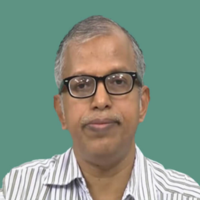
Prof. Debi Prasad Mishra
(Ex-Director, NITTTR Kolkata)
Professor-Department of Aerospace Engineering IIT Kanpur
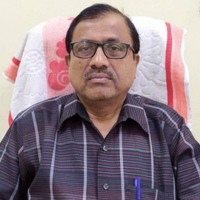
Prof. B.N. Panda
Professor in Education (Retd.)
Regional Institute of Education (RIE), NCERT
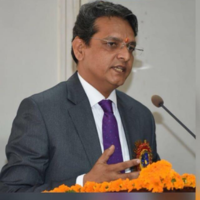
Prof. Arvind Kumar Jha
Professor & Dean-School of Education,
Indira Gandhi National Open University (IGNOU), New Delhi.
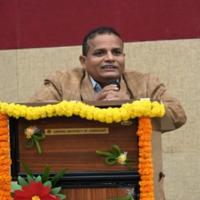
Prof. Tapan Kumar Basantia
Professor-Department of Education
Central University of Jharkhand
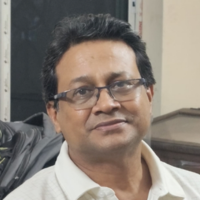
Prof. Bijan Sarkar
Professor-Department of Education
University of Kalyani, West Bengal
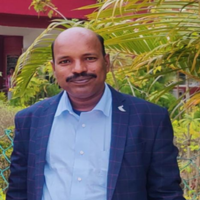
Prof. Amulya Kumar Acharya
Professor-Post Graduate
Department of Education Fakir Mohan University
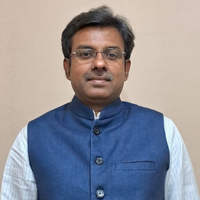
Dr. Anu G.S.
Associate Professor
Department of Education
Nagaland University (A Central University)
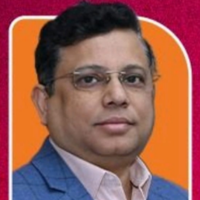
Mr. Manojit Sengupta
Delivery Centre Head-Eastern
Region Tata Consultancy Service
- Marmar Mukhopadhyay, Chairman, Educational Technology and Management Academy (ETMA), Gurugram
- Moumita Mukherjee, Dean-Research and Development, Adamas University, Kolkata
- Pushpanadham Karanam, Maharaja Sayajirao University, Baroda, Gujarat
- Yodida Bhutia, Sikkim University, Sikkim
- Asit Mantry, Central University of Jammu, Jammu
- Niradhar Dey, IGNOU, New Delhi
- Prof Shilpi Kumari, NCERT- RIE (NE), Shillong, Meghalaya
- Kausik Chatterjee, Associate Professor, SPRCE, Kolkata
- Theme 1: Indian Knowledge Systems and NEP 2020
- Philosophical foundations of NEP 2020 in Indian knowledge traditions
- Policy framework for integrating IKS in higher education
- Multi-disciplinarity and holistic education in Indian traditions
- Credit frameworks, curriculum reform, and IKS
- Role of IKS cells in HEIs
- Theme 2: Pedagogy and Teaching-Learning Practices
- Gurukul system and contemporary learner-centred pedagogy
- Experiential learning and inquiry in Indian traditions
- Indian epistemology and constructivist learning approaches
- Teacher preparation and professional ethics from IKS
- Digital pedagogy, smart classrooms, and AI-enabled tools for teaching IKS
- Gamification, simulation, and EdTech platforms for immersive IKS learning
- Theme 3: Indian Knowledge Systems and Sustainability
- Environmental ethics in Indian philosophy
- Indigenous ecological knowledge and climate resilience
- Traditional water management and sustainable agriculture
- IKS perspectives on Sustainable Development Goals (SDGs)
- Theme 4: Science, Mathematics, and Technology in IKS / Pedagogical Innovation
- Ancient Indian contributions to science and mathematics
- Ayurveda, Yoga, and traditional health sciences
- Metallurgy, architecture, and engineering in ancient India
- Validation of traditional scientific knowledge and modern innovation
- Disciplinary integration in traditional and contemporary contexts
- Computational methods, AI algorithms, and data science inspired by Indian mathematics and astronomy
- Modern biomedical and data-driven validation of Ayurveda and Yoga through AI and bioinformatics
- Theme 5: Innovation, Entrepreneurship, and Indigenous Knowledge
- Indigenous knowledge and grassroots innovation
- Traditional crafts, design thinking, and local entrepreneurship
- IKS and Atmanirbhar Bharat
- Intellectual property rights and traditional knowledge
- Start-ups based on Indian knowledge traditions
- Theme 6: Indian Knowledge Systems, Society and Ethics
- Value education and ethical frameworks in IKS
- Social harmony, inclusivity, and Indian thought
- Gender perspectives in Indian knowledge traditions
- Tribal and folk knowledge systems
- Community-based knowledge transmission
- Theme 7: Language, Culture, and Knowledge Transmission
- Role of Sanskrit and classical languages in IKS
- Indian linguistics and philosophy of language
- Oral traditions, folklore, and storytelling
- Arts, aesthetics, and Rasa theory
- Preservation and digitisation of indigenous knowledge
- Natural Language Processing (NLP), speech recognition, and OCR for deciphering ancient Indian scripts and manuscripts
- AI-assisted translation and multilingual access to Indian classical literature
(Papers addressing any other relevant topics or emerging perspectives that align with the central theme or any of the identified sub-themes of the seminar are also welcome.)
Only original and unpublished work related to the seminar theme will be accepted.
Authors Guidelines
Well-researched papers on the themes or sub-themes of the seminar are invited from Faculty members, Academicians, Research scholars, Students, and Professionals from different institutions. Abstract of papers should be between 300 and 500 words, in doc/word format, with 3 to 5 keywords. The participants should include in the abstract- Title of the Paper, Name of Author(s), University/Institution Affiliation, Email and Contact Number.
- Full-length papers should be between 3,000 and 5,000 words.
- Should be typed in Microsoft Word.
- Font style & size: “Times New Roman” & “12”
- Line spacing: 1.5 inch
- A Uniform Style for Citation should be strictly adhered to while submitting full-length papers (APA 7th Edition).
- Manuscripts with a similarity index up to 10% (excluding bibliography/references/quotes via iThenticate/Turnitin) and completely free of AI-generated content will be accepted.
The seminar proceedings, comprising selected peer-reviewed papers, will be proposed for publication with a reputed publisher, for which formal communication has already been initiated, and the publishing contract is currently underway.
- Academicians, researchers, and faculty members from all disciplines.
- Policymakers, educational administrators, and institutional leaders.
- Research scholars, post-graduate, and undergraduate students.
- EdTech innovators, technology developers, and industry practitioners.
Mode of Participation: Mandatory offline participation for participants from West Bengal & Hybrid (based on convenience) for Participants dwelling outside West Bengal.
Accommodation and Travel
- Limited number of outside participants will get accommodation on prior request.
- No TA/DA will be provided to the participants except key resource persons.
Event | Date |
Last Date for Abstract Submission | 10 December 2026 |
Notification of Acceptance | 13 December 2026 |
Last Date for Registration | 15 December 2026 |
Last Date for Full Paper Submission | 20 December 2026 |
Seminar Dates | 22nd & 23rd December 2026 (09:30 am onwards) |
| Category | Paper Presentation | Participation Only |
| Faculty & Academicians | ₹ 1,000 | ₹ 500 |
| Research Scholars | ₹ 500 | ₹ 300 |
| Students (UG / PG) | ₹ 500 | ₹ 200 |
(Each co-author needs to register separately. Registration amount includes a seminar kit, breakfast, and lunch during seminar days.)
Account Details
Account No. – 415620110000059
Account Name: Adamas University
Bank Name: Bank of India
Branch Name: AIT Campus Branch, AIT Campus North 24 Parganas, Pin-700126
IFSC Code: BKID0004156
MICR Code: 700013150
Abstract and Full Paper : iksicssrseminar@gmail.com
Registration: https://forms.gle/7kXZWSMsDCjuofKw7
Early submissions are greatly appreciated.
- By Air: Netaji Subhash Chandra Bose International Airport (CCU), Kolkata is approximately 14 km from the university campus. Prepaid airport taxis and app cabs are available.
- By Train: The nearest major railway hub is Barasat Junction (Sealdah line). Auto-rickshaws and e-rickshaws connect directly to the campus gate.
- By Road: Located along the Barasat–Barrackpore Road, regular shuttle and bus services run between Barrackpore Station and Barasat Duckbungalow crossing.
Google map link: https://maps.app.goo.gl/DH3afWmPftrBystA7
For any query, contact:
Mail: iksicssrseminar@gmail.com
Mobile: 9830204662 (Dr. Samaresh), 7005740450 (Dr. Nawaz),
9832310391 (Dr. Prasanta), 6374547858 (Dr. V. R. Rajesh)
Organizing Committee Details
1. Event Management Committee | 2. Academic & Technical Committee | 3. Documentation & Reporting Committee |
1. Dr. Brotati Chakraborty, School of Education, Adamas University 2. Dr. Ankhi Goon, School of Education, Adamas University 3. Mr. Prasanta Kumar Mondal, Librarian, GCMCE | 1. Dr. Arun Kumar Barai, Assistant Prof (Stage-III), GCMCE 2. Dr. Abhisek Panda, School of Education, Adamas University 3. Mr. Kalyan Benerjee, School of Education, Adamas University | 1. Dr. Ankhi Goon, School of Education, Adamas University 2. Dr. Md. Nawaz Sarif, School of Education, Adamas University 3 Dr Sairindhree Sen, Assistant Professor (Stage-II) GCMCE |
4. Media & Publication | 5. Decoration & Welcoming Committee (Stage Management) | 6. Registration & Kit Distribution Committee |
1. Dr. Md. Nawaz Sarif, School of Education, Adamas University 2. Dr. Prasanta Gayen, School of Education, Adamas University 3. Dr Koushik Mondal, Assistant Professor, GCMCE | 1. Dr. V R Rajesh, School of Education, Adamas University 2. Dr. Sweety Lakra, School of Education, Adamas University 3. Dr Bapan Sing, Assistant Professor, GCMCE. | 1. Dr. Madhurima Chakraborty, School of Education, Adamas University 2. Mr. Kalyan Benerjee, School of Education, Adamas University 3. Mr. Prasenjit Mondal, GCMCE |
7. Gift & Memento Committee | 8. Snacks & Food Committee | 9. Transport & Hospitality Committee |
1. Dr. Ankhi Goon, School of Education, Adamas University 2. Dr. Abhisek Panda, School of Education, Adamas University 3. Miss Ritapa Acharya, GCMCE
| 1. Dr. Abhisek Panda, School of Education, Adamas University 2. Mr. Kalyan Benerjee, School of Education, Adamas University 3. Dr Arun Kumar Barai, Assistant Prof (Stage-III), GCMCE | 1. Dr. Vishal Kumar, School of Education, Adamas University 2. Dr. Prasanta Gayen, School of Education, Adamas University 3. Dr Sisir Kumar Sarkar, Assistant Professor, GCMCE. |
10. Accounting & Payment Committee | 11. ICT Committee | 12. Discipline Committee |
1. Dr. Madhurima Chakraborty, School of Education, Adamas University 2. Dr. V R Rajesh, School of Education, Adamas University 3. Dr. Samaresh Adak, Assistant Professor in Chemistry (Stage-II), GCMCE | 1. Dr. Debabrata Sarkar, School of Education, Adamas University 2. Mr. Kalyan Benerjee, School of Education, Adamas University 3. Mr Prasanta Kumar Mondal, Librarian, GCMCE | 1. Dr. Brotati Chakroborty, School of Education, Adamas University 2. Dr. Samaresh Adak, Assistant Professor in Chemistry (Stage-II), GCMCE 3. Dr. Vishal Kumar, School of Education, Adamas University |